Mount Rinjani National Park 2026: e-Rinjani Permits, Prices & Trekking Rules Explained
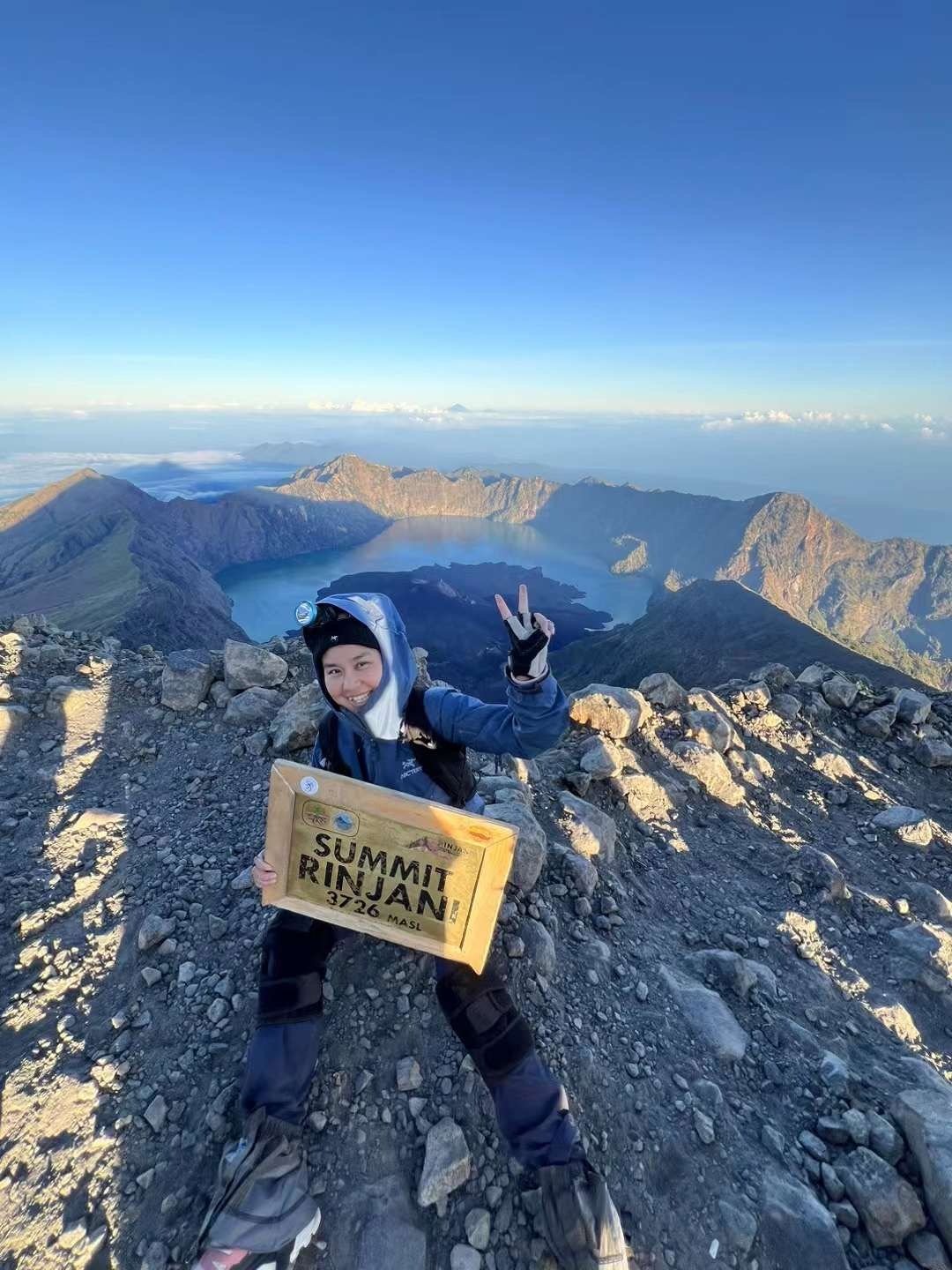
Mount Rinjani isn’t a mountain you can just show up and climb. At 3,726 meters, it’s Indonesia’s second-highest volcano, and every step inside Rinjani National Park is regulated by the e-Rinjani permit system. Skip it, and you won’t get past the entry gate — rangers check permits against passport data on the spot.
If you’re planning a 2026 trek, here’s exactly how the system works right now: how to register, what it actually costs, which rules changed this year, and when the mountain is closed entirely.
What Is Mount Rinjani National Park (TNGR)?
Rinjani National Park — Taman Nasional Gunung Rinjani (TNGR) — is the protected area covering the volcano, its crater lake Segara Anak, and the surrounding forest and savanna. It’s managed directly by the Mount Rinjani National Park Authority, and since 2019 all visitor access has run through one digital system rather than paper permits bought at the gate.
The park isn’t just a hiking trail. It’s a working conservation area, and the rules exist to manage erosion, waste, and visitor safety on a mountain that sees heavy seasonal traffic.
The e-Rinjani Permit System: How Booking Actually Works
Every trekker — domestic or foreign — needs an individual e-Rinjani permit tied to their own passport or ID. A few things worth knowing before you try to book it yourself:
- The primary booking method is the e-Rinjani mobile app, available on the Google Play Store. It’s Android-only — if you’re on iPhone, you’ll need to borrow a device or book through a licensed trekking operator, who registers your data on your behalf.
- Some guides also point to rinjaninationalpark.id as a web-based registration option. Between the app and the website, details on which one is authoritative for direct self-booking aren’t fully consistent across sources at the time of writing — if you’re booking independently rather than through an operator, confirm the current process directly with TNGR before relying on either.
- Registration requires your full name, nationality, and passport number, exactly as they appear on your ID — mismatches cause problems at the entry gate.
- Your route and trek date lock in once submitted and can’t be changed without a formal cancellation.
- Quota is checked in real time. If your preferred date is full, the system will show you the next available one.
The easiest path for most travelers: book through a licensed operator. They handle the e-Rinjani registration, guide assignment, and insurance as part of the package, which sidesteps the Android-only app issue entirely.
Mount Rinjani Trekking Prices in 2026
Entrance fees changed in late 2025 under Ministerial Regulation (Permen LHK) No. 17 of 2025, effective November 3, 2025. Rinjani was reclassified to a higher conservation category, and pricing shifted from being route-based to being based on climbing class — Class I trails now carry a flat per-day rate regardless of which of the three main routes you take.
| Visitor type | Fee per person, per day | 2D1N trek | 3D2N trek | 4D3N trek |
|---|---|---|---|---|
| Foreign visitor (Class I: Sembalun, Senaru, Torean) | IDR 250,000 | IDR 500,000 | IDR 750,000 | IDR 1,000,000 |
| Domestic visitor | approx. IDR 50,000–75,000 | approx. IDR 100,000–150,000 | approx. IDR 150,000–225,000 | approx. IDR 200,000–300,000 |
Important: this is the national park entrance fee only. It does not include your mandatory guide, porters, camping equipment, meals, or transport — those are bundled into any trekking operator’s package price, which is why a “2D1N Rinjani trek” is rarely advertised at just the entrance fee figure. If a quoted price looks too close to the table above, check what’s actually included before booking.
Mandatory Trekking Rules for 2026
A handful of rules apply to every trekker, no exceptions:
- A licensed guide is mandatory. Independent trekking without a registered guide isn’t permitted for any visitor, foreign or domestic.
- Guide-to-trekker ratios are enforced — expect roughly one guide for every four trekkers in a group, though exact ratios can vary by operator and route.
- Trekking insurance is mandatory, a rule introduced when the 2026 season reopened on March 6, 2026. Basic coverage is bundled into your e-Rinjani ticket; an optional premium tier adds extended coverage, including helicopter evacuation.
- A medical certificate is required before you’re allowed past the gate, confirming you’re fit for high-altitude trekking. Bring this with you — it’s checked alongside your permit.
- Your original passport or ID must match your e-Rinjani registration exactly. Rangers verify this at the entrance gate.
- Permits are non-refundable for personal cancellations (illness, change of plans), though rescheduling is usually possible if quota allows.
When Mount Rinjani Is Closed (And When to Go)
Rinjani National Park closes annually from January 1 to March 31 for ecosystem recovery during the wet season — trails are dangerous and closed to all visitors during this window, no exceptions.
The trekking season effectively runs April through October, with the driest, most stable conditions from June to September. Peak season (July–August, and around national holidays) sells out fastest, so book your permit 2–4 weeks ahead at minimum — earlier if you’re set on specific dates.
Choosing Your Route
Six official trails access the park, though three make up the main Class I routes:
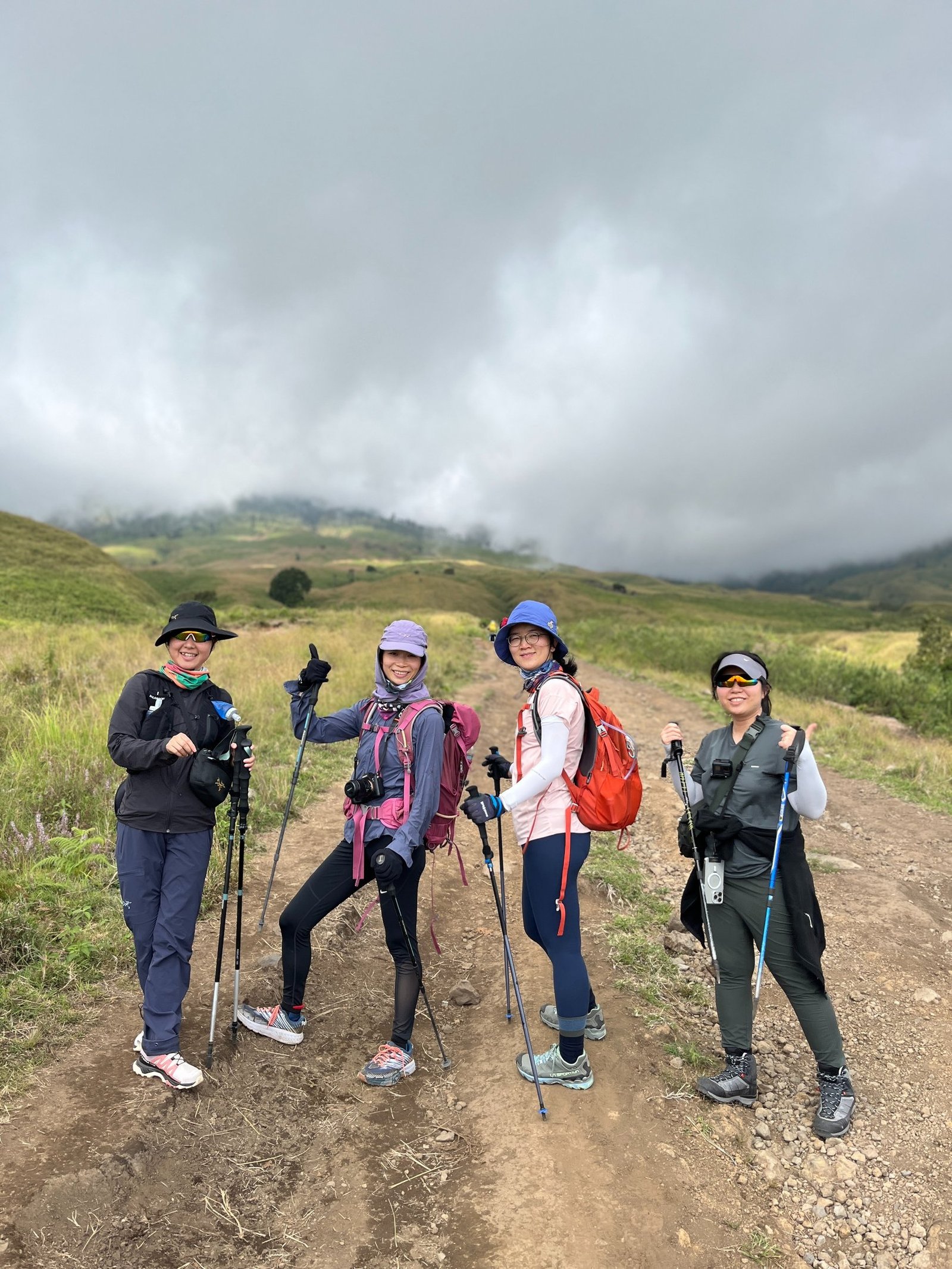
- Sembalun — the most popular ascent route, open savanna landscape, most direct path to the summit.
- Senaru — climbs through montane rainforest; often combined with Sembalun as an up-one-side, down-the-other loop via the crater rim.
- Torean — quieter, river-valley scenery, frequently used as a descent route rather than the ascent.
- Timbanuh, Aik Berik, and Tete Batu — southern access points, generally shorter routes to the crater rim, useful if you’re short on time. Fee classification for these differs from the three Class I trails above, so confirm current pricing for your specific route when booking.
Where You’ll Camp
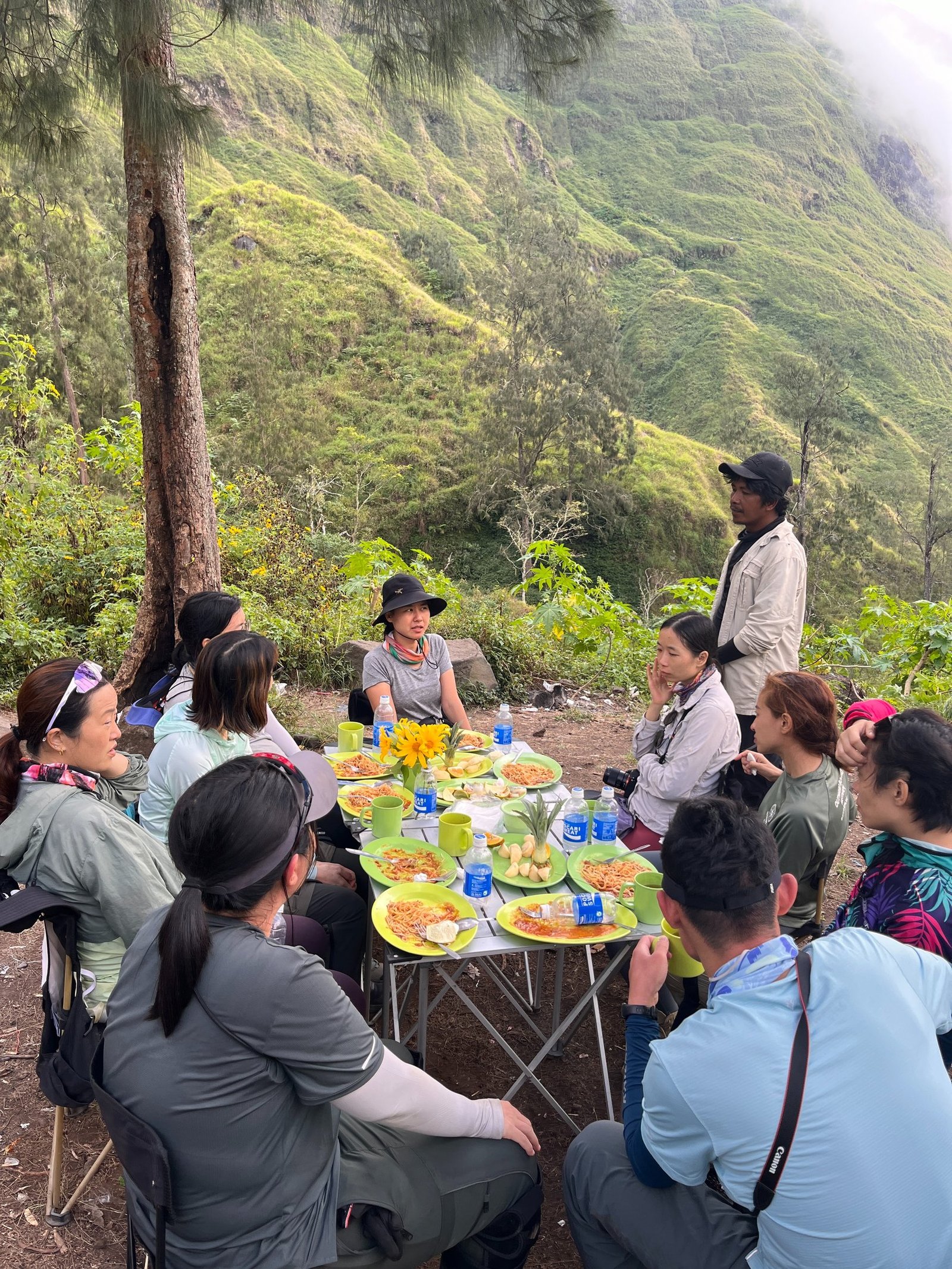
- Segara Anak Lake Camp — the scenic centerpiece, right beside the crater lake and hot springs. Swimming and playing music at the lake are not permitted — it’s considered sacred by local communities.
- Plawangan Senaru Crater Rim Camp — panoramic views over the lake and, on a clear day, across to Bali. Cold and windy; pack layers.
- Propok Camp (Torean route) — a quieter valley setting near a river and waterfall, often used on 3D2N or 4D3N descents.
Good to Know Before You Book
A few details are genuinely inconsistent across current sources, and we’d rather flag that than paper over it:
- Whether independent trekkers should register via the e-Rinjani Android app or the rinjaninationalpark.id website isn’t entirely clear-cut — both are referenced as valid, but the app appears to be the primary tool for actual ticket purchase.
- Exact guide-to-trekker ratios appear to vary somewhat by source and by operator.
- Fee classification for the shorter southern routes (Timbanuh, Aik Berik, Tete Batu) isn’t as clearly documented as the three Class I trails.
None of this is a reason to worry — it’s simply why booking through a licensed local operator, who deals with TNGR directly and stays current on regulation changes, is genuinely the easier and safer route for most travelers rather than a corner being cut.
No. A licensed guide is mandatory for every trekker, regardless of experience level or nationality.
Register through the e-Rinjani Android app or have a licensed trekking operator handle registration on your behalf. Booking through an operator is recommended, especially if you don't have an Android device.
The national park entrance fee for foreign visitors on Class I routes (Sembalun, Senaru, Torean) is IDR 250,000 per person per day. A full trekking package including guide, porters, camping gear, and meals costs significantly more than the entrance fee alone.
The park closes every year from January 1 to March 31 for ecosystem recovery. The trekking season runs from April through October.
Yes. Trekking insurance became mandatory when the 2026 season reopened in March. Basic coverage is included in the e-Rinjani ticket, with an optional premium tier available for extended coverage including helicopter evacuation.
Book at least 2 to 4 weeks in advance, and earlier during peak season in July and August, when permits sell out fastest.
Ready to Trek Rinjani?
Sorting out permits, guides, and gear alone adds a layer of stress to an already demanding trek. NusaTraveller’s Rinjani packages handle the e-Rinjani registration, licensed guide, insurance, and camping logistics for you:
- Rinjani Trekking Tours (2 Days 1 Night)
- Rinjani Trekking Tours (3 Days 2 Nights)
- Rinjani Trekking Tours (4 Days 3 Nights)
- See all Rinjani trekking options
Have questions about which route or duration fits your trip? Chat with us on WhatsApp for a free consultation.